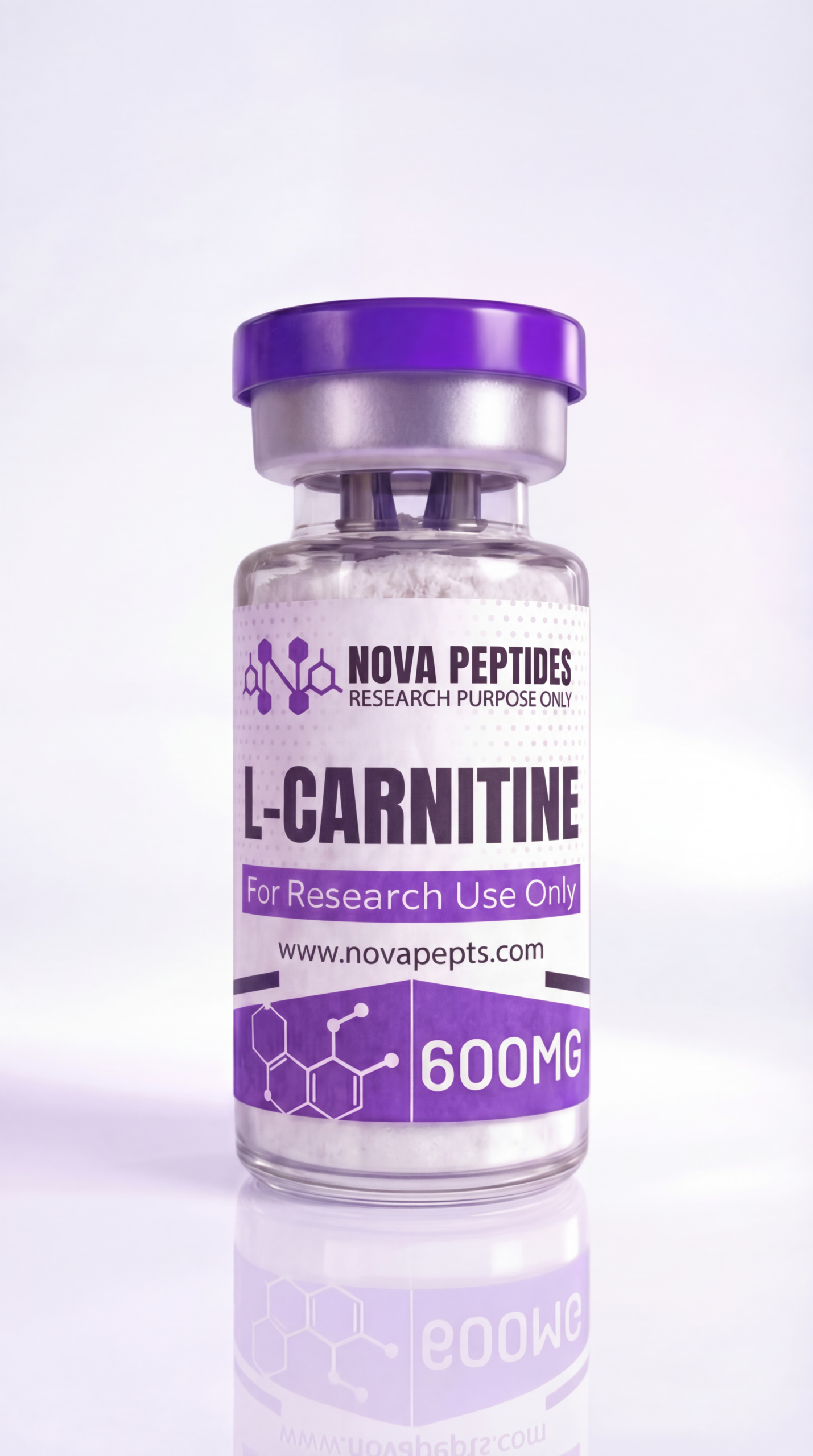
€38,00
| Dosage | 600mg |
|---|
VISA, APPLEPAY, GPAY
Hassle-free returns within 30 days
Guaranteed quality
We’re here anytime
From €130
L-Carnitine is a naturally occurring amino acid derivative that plays a central role in cellular energy production. Its primary function is transporting long-chain fatty acids into the mitochondria, where they can be converted into usable energy. Without adequate L-Carnitine activity, fats cannot efficiently enter the cell’s energy factories, limiting metabolic performance and energy output.
Because of this mechanism, L-Carnitine has become widely researched in fields related to fat metabolism, endurance, exercise recovery, mitochondrial health, and cognitive performance. Researchers have also explored its potential role in cardiovascular function, healthy aging, and metabolic efficiency.
Unlike stimulant-based compounds that force energy output through the nervous system, L-Carnitine works by improving the body’s natural ability to utilise stored fat for fuel. This makes it especially interesting in research focused on sustained energy production, physical performance, and cellular function.
Reliable research starts with reliable compounds. At Novapepts, we provide high-purity research-grade L-Carnitine manufactured under strict quality standards to support consistency and precision in laboratory settings.
Researchers choose Novapepts because our compounds are:
• Manufactured for purity, stability, and consistency
• Independently third-party tested for quality verification
• Carefully packaged and securely shipped worldwide
• Supported by responsive customer service and flexible payment options
Every batch is selected with serious research applications in mind, giving laboratories confidence in the materials they use.
L-Carnitine acts as a transport molecule inside the body. Its main role is carrying long-chain fatty acids into the mitochondria, where those fats are converted into ATP, the primary energy source used by cells.
This process is especially important in tissues with high energy demands, including muscle tissue, the heart, and the brain. By supporting mitochondrial fat metabolism, L-Carnitine may help improve energy efficiency and reduce the accumulation of unused fatty acids within cells.
Research also suggests L-Carnitine may assist with reducing oxidative stress, supporting recovery pathways, and improving mitochondrial function under metabolic stress conditions.
L-Carnitine has been extensively studied across metabolic, athletic, cardiovascular, and neurological research fields due to its involvement in cellular energy production and mitochondrial performance.
One of the most researched areas surrounding L-Carnitine is its role in fatty acid oxidation. By transporting fats into mitochondria for energy production, L-Carnitine has become a major focus in studies involving metabolic efficiency and body composition.
Researchers continue investigating its potential role in supporting fat utilisation during physical activity and metabolic stress.
L-Carnitine is frequently studied in sports and exercise science due to its relationship with muscular energy production. Research has explored its potential impact on endurance, recovery speed, exercise fatigue, and muscle soreness following intense activity.
Some studies also suggest it may help support oxygen utilisation and reduce markers associated with exercise-induced stress.
Because mitochondrial efficiency naturally declines with age, L-Carnitine has attracted attention in longevity and cellular aging research. Scientists are exploring its ability to support mitochondrial performance, energy metabolism, and cellular resilience over time.
Its relationship with oxidative stress reduction has also made it relevant in studies examining healthy aging pathways.
Acetyl-L-Carnitine, a related form of L-Carnitine, has been widely studied for neurological and cognitive applications. Research in this area focuses on mitochondrial support within brain tissue, mental energy, and neuroprotective pathways linked to cellular metabolism.
This has positioned L-Carnitine related compounds as subjects of interest in cognitive performance and brain health studies.
L-Carnitine is commonly researched in studies focused on:
• Fat metabolism and energy production
• Athletic performance and recovery
• Mitochondrial function and healthy aging
• Cardiovascular and metabolic health
• Cognitive and neurological support pathways
Its broad involvement in cellular energy systems makes it one of the most versatile metabolic compounds under investigation today.
Research protocols involving L-Carnitine vary depending on the model and study objectives. Experimental protocols commonly explore ranges between 500 mg and 3000 mg daily depending on the specific application being investigated.
L-Carnitine is frequently studied in oral, injectable, and acetylated forms, each offering different absorption and tissue distribution characteristics.
All preparation and handling procedures should follow proper laboratory standards and existing literature relevant to the intended research design.
What does L-Carnitine do?
L-Carnitine helps transport fatty acids into mitochondria where they can be converted into cellular energy.
Is L-Carnitine a stimulant?
No. L-Carnitine does not stimulate the nervous system like caffeine or traditional stimulants. Its effects are linked to cellular energy metabolism.
Why is L-Carnitine popular in performance research?
Because of its role in fat metabolism and mitochondrial energy production, it is frequently studied for endurance, recovery, and exercise performance applications.
What is the difference between L-Carnitine and Acetyl-L-Carnitine?
Acetyl-L-Carnitine is a modified form that more readily crosses the blood-brain barrier, making it more common in neurological and cognitive research.
🚚 Secure tracked shipping available worldwide
⚠️For research purposes only. Not for human or animal consumption.