€180,00
Out of stock
VISA, APPLEPAY, GPAY
Hassle-free returns within 30 days
Guaranteed quality
We’re here anytime
From €130
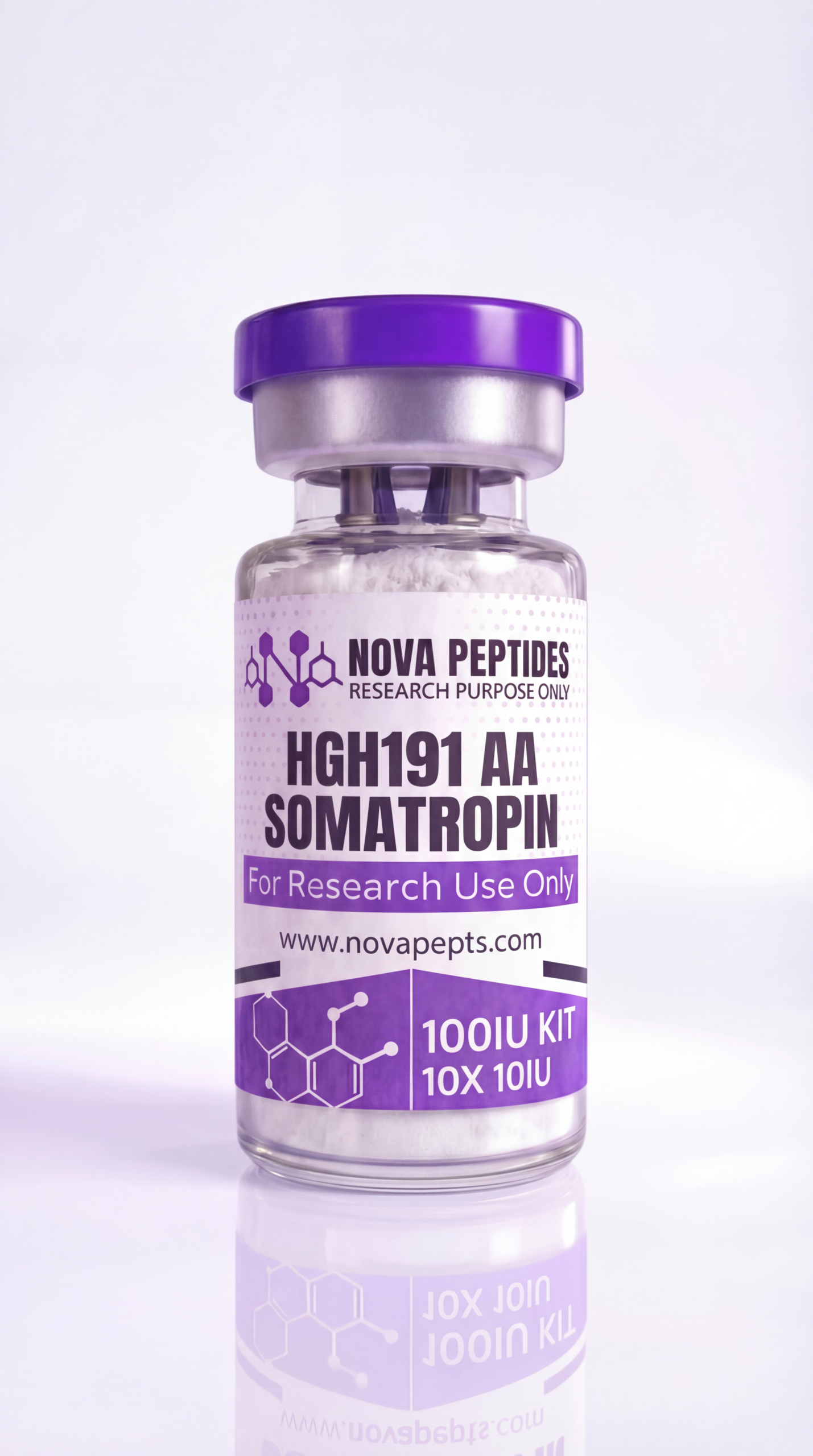
HGH 191AA Somatropin is a synthetic form of human growth hormone composed of the full 191 amino acid sequence identical to naturally produced endogenous GH. As one of the most extensively researched peptide hormones, Somatropin plays a major role in growth signalling, cellular repair, metabolism, muscle development, and tissue regeneration.
Growth hormone production naturally declines with age, which has led researchers to explore the broader effects of GH pathways on muscle maintenance, recovery, body composition, energy metabolism, and healthy aging. HGH 191AA Somatropin is commonly studied for its ability to stimulate IGF 1 production, support protein synthesis, and influence cellular growth mechanisms throughout the body.
Because of its wide biological activity, Somatropin continues to attract interest in fields ranging from regenerative science and performance research to metabolism and recovery studies.
Precision and consistency are critical when working with growth hormone compounds. Novapepts supplies research-grade HGH 191AA Somatropin manufactured to high purity standards for laboratories that require dependable quality and reproducible results.
Researchers choose Novapepts because our compounds are:
• Produced under strict quality-controlled manufacturing standards
• Independently tested for purity and composition
• Securely packaged and shipped worldwide with tracking
• Supported by responsive customer service and flexible payment methods
Every batch is selected to support serious research applications where reliability matters.
Somatropin functions by binding to growth hormone receptors throughout the body, triggering signalling pathways involved in growth, repair, metabolism, and regeneration.
One of its primary downstream effects is stimulating the liver to produce insulin like growth factor 1, commonly known as IGF 1. Together, GH and IGF 1 regulate processes linked to protein synthesis, tissue repair, muscle growth, bone density, and nutrient utilisation.
Growth hormone also influences fat metabolism by encouraging lipolysis, the breakdown of stored fat for energy use. At the same time, it supports cellular turnover and recovery processes in muscle, connective tissue, and other organs.
Because of these broad systemic effects, HGH 191AA Somatropin remains one of the most researched compounds in regenerative and metabolic science.
HGH 191AA Somatropin has been widely studied across multiple scientific fields due to its central role in growth signalling and tissue regeneration.
One of the most established areas of research surrounding Somatropin involves muscle growth, protein synthesis, and post exercise recovery. Growth hormone signalling is closely linked to lean tissue development and muscular repair processes.
Researchers continue studying its role in recovery from intense physical stress, muscle preservation, and tissue regeneration pathways.
Growth hormone has long been associated with lipolysis and metabolic regulation. Studies suggest HGH signalling may influence body composition by supporting fat utilisation while preserving lean tissue mass.
This has made Somatropin a major focus in metabolic and obesity related research.
Because endogenous growth hormone production naturally declines over time, HGH 191AA Somatropin has become increasingly relevant in aging and regenerative research.
Scientists are investigating how GH related pathways influence recovery capacity, energy metabolism, tissue maintenance, and overall cellular resilience during aging.
Growth hormone signalling also plays a role in bone turnover and connective tissue regeneration. Research has explored its potential impact on bone density, collagen production, tendon recovery, and joint support pathways.
These regenerative properties continue to drive interest in orthopedic and recovery focused studies.
Much of Somatropin’s activity is linked to its ability to stimulate IGF 1 production. This signalling cascade affects multiple tissues throughout the body and remains a major focus in endocrine and growth related research.
The relationship between GH and IGF 1 continues to be studied for its effects on metabolism, regeneration, and cellular performance.
HGH 191AA Somatropin is commonly researched in studies involving:
• Muscle growth and tissue recovery
• Fat metabolism and body composition
• Healthy aging and regenerative science
• Bone density and connective tissue support
• Endocrine and IGF 1 signalling pathways
Its broad biological influence makes it one of the most recognised and extensively studied peptide hormones in modern research.
Research protocols involving HGH 191AA Somatropin vary depending on study objectives, model type, and duration. Experimental literature commonly references ranges between 1 IU and 6 IU daily depending on the intended research application.
The compound is typically supplied in lyophilised form and reconstituted using bacteriostatic water under sterile laboratory conditions. Once prepared, it should be refrigerated and handled according to established laboratory standards.
Researchers should always review existing scientific literature and follow appropriate protocols relevant to their study design.
What is HGH 191AA Somatropin?
It is a synthetic form of human growth hormone containing the full 191 amino acid sequence identical to naturally produced endogenous GH.
What does Somatropin do?
Somatropin stimulates growth hormone signalling pathways involved in tissue repair, muscle growth, metabolism, recovery, and IGF 1 production.
Why is HGH researched for anti aging applications?
Natural growth hormone levels decline with age, leading researchers to investigate its role in recovery, tissue maintenance, metabolism, and cellular regeneration.
How is HGH 191AA Somatropin prepared for research?
It is commonly reconstituted with bacteriostatic water under sterile laboratory conditions and stored refrigerated after preparation.
🚚 Secure tracked shipping available worldwide
⚠️For research purposes only. Not for human or animal consumption.